
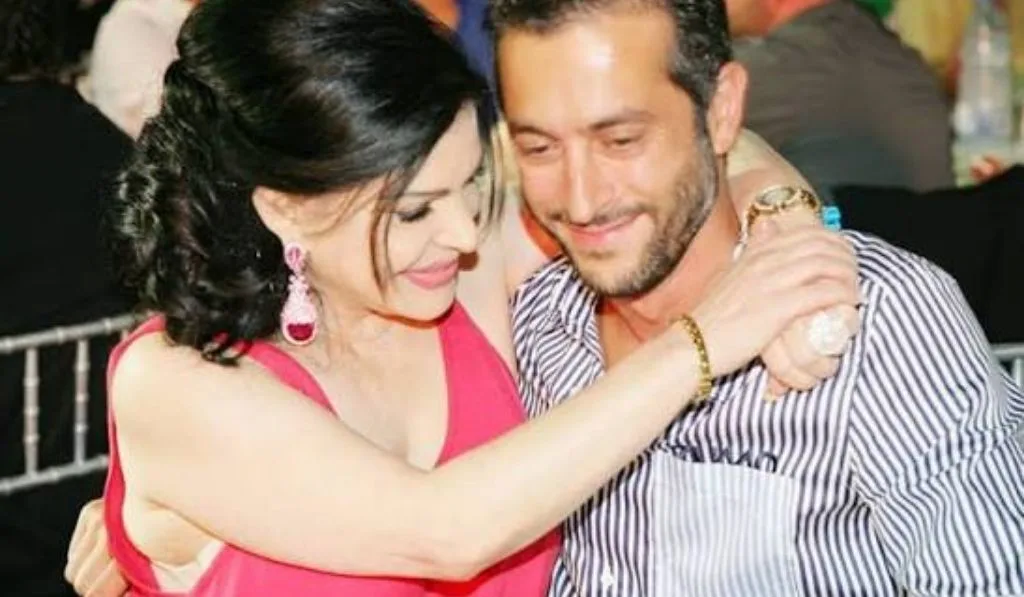
She ran one of Iraq’s most advanced scientific institutions, led a team of over 200 researchers, and represented her country at United Nations energy talks. Yet most people who search Nidal Al-Hamdani’s name know her for one thing: her alleged marriage to Saddam Hussein. Her story is a rare collision of genuine professional achievement and deeply murky personal history, set against the backdrop of one of the most secretive regimes of the 20th century. This article covers everything currently known about her background, her scientific career, her reported marriage to the Iraqi president, and what happened after 2003.
Quick facts: Nidal Al-Hamdani
| Detail | Information |
| Full name | Nidal Al-Hamdani |
| Nationality | Iraqi |
| Profession | Scientist, scientific administrator |
| Role | General Manager, Solar Energy Research Center |
| Institution | Council of Scientific Research, Iraq |
| Alleged marriage | Saddam Hussein (1990 – 2006) |
| Children | None reported |
| Current status | Unknown; no confirmed sightings since 2003 |
| Birth date | Not publicly recorded |
Who is Nidal Al-Hamdani?
Most people who come across her name are trying to piece together the private life of Saddam Hussein, and she keeps coming up as his third and final wife. But reducing her to that single fact misses a genuinely interesting story. She was a trained scientist who rose to lead a major national research institution at a time when women in senior government roles in Ba’athist Iraq were exceptionally rare.
Her exact birth date has never appeared in any public record. The secrecy surrounding her personal life mirrors the broader opacity of the Ba’athist regime, which controlled what information reached the outside world. What is clear is that she built a serious professional reputation through her work in physics and renewable energy, earning her place in Iraq’s scientific establishment on the strength of her expertise.
Early life and education
The details of her childhood and early education are thin. Most accounts place her birth in the Baghdad area, but no verified date exists. She is believed to have studied at the University of Baghdad, which served as Iraq’s primary hub for scientific training during the 1970s and 1980s. Her focus was on applied physics, specifically solar radiation and thermal energy conversion.
Her academic path aligned with a broader national push during what many historians of the region describe as Iraq’s peak period of investment in technical education. The government under Saddam Hussein actively recruited and elevated engineers and scientists as part of a “National Scientific Plan” aimed at modernizing the country’s infrastructure and reducing dependence on foreign expertise.
She joined the Council of Scientific Research and became a member of the Iraqi Engineers Union. These were not ceremonial positions. They placed her inside the institutional machinery that controlled research funding and national energy policy.
Her career at Iraq’s Solar Energy Research Center
Her appointment as General Manager of the Solar Energy Research Center was her most significant professional achievement. She oversaw a team of more than 200 scientists and technicians, making her one of the most senior women in Iraqi government science at the time.
The center operated under the Council of Scientific Research and focused on practical applications of solar power suited to Iraq’s extreme climate. Summers in Iraq routinely push past 50 degrees Celsius, making passive cooling and energy efficiency urgent national concerns rather than abstract research topics.
Key projects completed under her leadership included:
- The Baghdad Solar House (1982): The first model of energy-neutral residential design built in Iraq, demonstrating that solar architecture was viable in extreme heat.
- Solar desalination initiative (1985): Converted saltwater to fresh water for rural agricultural communities using solar thermal technology.
- Thermal cooling systems (1988): Reduced city-wide power consumption during peak summer months by developing passive cooling methods for urban buildings.
She also secured continued research funding during the Iran-Iraq War, a period when most non-military budgets faced severe cuts. That alone signals the level of trust the regime placed in her and in her work. She represented Iraq at UN-led energy conferences, extending the center’s influence into international scientific dialogue.
Her work has since drawn attention from researchers studying Iraq’s 2025-2026 renewable energy expansion. The Basra 1000MW solar project, one of the country’s most ambitious green energy initiatives in recent years, draws on foundations that her center helped establish decades earlier.
The alleged marriage to Saddam Hussein
This is where the documented record gets much thinner. Most accounts describe the marriage as originating during a scientific tour, when Saddam Hussein encountered her while she was working as a researcher. At the time, she was married to another professional.
The pattern that followed mirrors what happened with Samira Shahbandar, widely cited as Saddam’s second wife. In Shahbandar’s case, her husband was reportedly forced to end their marriage. Accounts of Nidal Al-Hamdani’s situation describe the same dynamic: her husband was pressured to divorce her, after which she became, according to multiple secondary sources, the president’s third wife around 1990.
It is worth being clear about what is and is not confirmed here:
- Cited in secondary sources: Her marriage to Saddam Hussein appears across numerous biographical summaries and reference entries.
- Not confirmed by primary sources: No official Iraqi government document, court record, or independent first-hand testimony has verified the legal status of the marriage.
- No children: Unlike Sajida Talfah, who had five children with Saddam, or Samira Shahbandar, who reportedly had a son named Ali, Nidal Al-Hamdani is not reported to have had any children from this marriage.
Life inside the presidential household, based on accounts from people who knew the inner circle, meant extreme isolation. She reportedly lived in a high-security villa in Baghdad’s Green Zone area. She was rarely present at public functions but did attend private state dinners. Her scientific responsibilities continued, but her personal freedom was severely constrained.
Life under the regime: wealth, isolation, and identity
Her financial situation during the marriage was tied to what sources describe as the regime’s “Presidential Gift” system. Top officials and members of the presidential household did not receive conventional government salaries. Instead, they were allocated land, vehicles, and properties at the discretion of the president. She reportedly received a large villa and other assets through this system.
This made her materially comfortable but entirely dependent on the regime’s continued favor. There was no obvious path out, and no precedent for leaving safely.
Her dual identity during this period was genuinely unusual. She was both a credentialed scientist directing national research and a woman reportedly trapped in a marriage she had no choice about entering. The Ba’athist system made these two realities coexist without apparent contradiction, at least from the outside.
What happened after 2003?

The U.S.-led invasion of Iraq in March 2003 brought down the government she had served and the household she had lived in. What happened to Nidal Al-Hamdani after that point is unknown.
There are no confirmed sightings, no verified public statements, and no official records of her whereabouts as of 2026. Historians and researchers who have studied the fate of Saddam Hussein’s inner circle categorize her current status as simply “missing.” She did not appear in any of the post-invasion legal proceedings that ensnared other senior Ba’athist figures.
Possible explanations researchers have suggested include:
- She fled Iraq before or during the invasion and has lived under a different identity elsewhere.
- She remained in Iraq and has chosen complete withdrawal from public life.
- She died at some point after 2003, though no death certificate or credible report has confirmed this.
None of these can be confirmed. Unlike Saddam’s daughters Raghad and Rana, who received sanctuary in Amman, Jordan, and spoke publicly to CNN in 2003, Nidal Al-Hamdani has not surfaced in any verified news account since the regime fell. She has left no recorded interviews, no published papers from after that period, and no social media presence under any name connected to her.
The silence is complete.
Read more: James A. Ben: the real story behind Trish Regan’s quietly powerful husband
Her place in Iraqi scientific history
Whatever the full truth of her personal life, her professional legacy deserves to stand on its own. She operated in a field where women were a small minority, in a country where political affiliation could determine scientific funding, and in a regime where maintaining your position required constant navigation of unpredictable power. She did all of this while advancing research that had real, practical benefits for ordinary Iraqi people.
The solar desalination work, the passive cooling research, the Baghdad Solar House project – these were not vanity projects. They addressed the actual problems of a country with intense heat, limited freshwater in rural areas, and a developing electrical grid. Her center’s output belongs to the history of renewable energy development in the Arab world, not only to the footnotes of Saddam Hussein’s biography.
The tragedy of her story is that the marriage link will always dominate search results, while the scientific work sits largely unread in files from institutions that no longer exist in their original form.
Final thoughts
Nidal Al-Hamdani’s story resists easy categorization. She was not simply a victim of a powerful man, nor simply a collaborator with a brutal regime. She was a trained scientist who built a real career, led real projects, and produced real results in a field that mattered. The circumstances that tangled her personal life with Saddam Hussein’s were not of her choosing, if the accounts are accurate.
What stays with you after reading about her is the disappearance. More than two decades have passed since the invasion, and there is still no answer to the simplest question: is she alive? That silence feels fitting for a life that was so thoroughly controlled by forces outside herself. She deserves to be remembered for the solar house in Baghdad and the desalination work in rural Iraq, not just as a name in a list of Saddam Hussein’s wives.
Frequently asked questions
Who is Nidal Al-Hamdani?
She is an Iraqi scientist who served as General Manager of the Solar Energy Research Center under Iraq’s Council of Scientific Research. She is also widely cited as the third wife of former President Saddam Hussein, though the marriage has not been confirmed by independent primary sources.
Did Nidal Al-Hamdani have children with Saddam Hussein?
No. According to all available accounts, she did not have children with Saddam Hussein. His children with Sajida Talfah, his first wife, include Uday and Qusay Hussein.
What happened to Nidal Al-Hamdani after 2003?
Her whereabouts after the 2003 U.S.-led invasion of Iraq are completely unknown. No verified sightings, interviews, or official records have placed her anywhere since the fall of Saddam Hussein’s government. Researchers who have studied the period list her status as missing.
Was her marriage to Saddam Hussein confirmed?
The marriage appears consistently in secondary biographical sources but has not been verified through independent primary documentation. No official Iraqi records, court documents, or first-hand testimony have confirmed its legal status. Most sources describe it as alleged.
What did Nidal Al-Hamdani actually do at the Solar Energy Research Center?
She directed a team of over 200 scientists and technicians, overseeing projects in solar thermal cooling, water desalination for rural communities, and energy-neutral building design. She also represented Iraq in UN-level energy conferences and secured research funding during the Iran-Iraq War.
How is Nidal Al-Hamdani different from Saddam Hussein’s other wives?
Unlike Sajida Talfah, who was Saddam’s first wife and mother of his five children, or Samira Shahbandar, who was described as his favorite and reportedly had a son with him, Nidal Al-Hamdani had no children and maintained an active professional career throughout her time connected to the regime.
Is Nidal Al-Hamdani still alive?
As of 2026, there is no confirmed answer. No death certificate, hospital record, or credible news report has established whether she is alive or deceased. She remains one of the more complete mysteries connected to Iraq’s Ba’athist era.