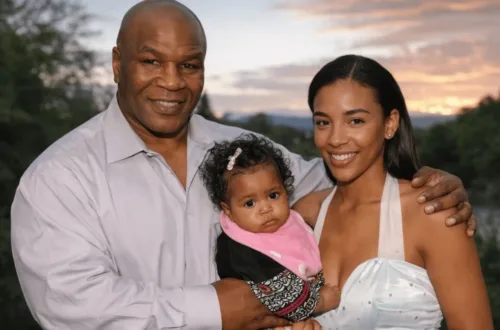

If you searched for Ana Luz Rodriguez-Paz expecting to find just another celebrity spouse profile, you are about to be pleasantly surprised. She is a licensed clinical psychologist with a PhD, the founder of a respected bilingual therapy practice in South Florida, and a woman whose entire career has been built around helping people heal — quietly, patiently, and without any need for a spotlight. Yes, she is married to former NFL star and long-time sportscaster Ahmad Rashad, and yes, their 32-year age gap drew attention when they married in 2016. But her real story is about education, cultural identity, community care, and what it looks like when someone chooses purpose over publicity every single day.
Quick facts about Ana Luz Rodriguez-Paz
| Detail | Information |
| Full name | Ana Luz Rodriguez-Paz |
| Birth year | Around 1989 to 1990 |
| Age (2026) | Approximately 36 to 37 |
| Nationality | American |
| Ethnicity | Hispanic (Cuban-American background) |
| Languages | English and Spanish |
| Profession | Licensed clinical psychologist and therapist |
| Specialties | Family therapy, play therapy, couples counseling, individual therapy |
| Education | Boston University, New York University, PhD from Nova Southeastern University |
| Practice name | ALRP Therapy (also known as Paz Mental Health) |
| Practice location | Boca Raton, South Florida (telehealth available statewide) |
| Years active | 2014 to present |
| Spouse | Ahmad Rashad |
| Wedding date | April 30, 2016 |
| Children | One daughter with Ahmad; stepmother to his six children including actress Condola Rashad |
| Social media | @alrptherapy (professional), @analuzrodrigue (personal) |
Who is Ana Luz Rodriguez-Paz?
Ana Luz Rodriguez-Paz grew up in a Cuban-American household where speaking English and Spanish in the same conversation was completely normal. Language was not something she had to think about — it just flowed, and that natural fluency gave her an early, instinctive understanding of how differently people feel when they speak in their mother tongue versus a second language. She saw how people opened up more, relaxed more, and expressed themselves more honestly when they used the words that felt most like home.
Her family emphasized empathy, strong community ties, and a genuine respect for other people’s experiences. Those values never left her. When she later entered the field of psychology, she carried all of it with her — the bilingualism, the cultural awareness, and a deep personal belief that nobody should ever feel too foreign or too misunderstood to ask for help.
Her education and the long road to becoming a psychologist
Ana Luz did not take shortcuts. She built her expertise carefully and methodically across multiple institutions, each one adding a new layer to her clinical understanding.
- She began at Boston University, where she studied the foundations of human behavior and psychological theory.
- She continued at New York University, a school known for its diverse student body and progressive thinking about mental health across cultures.
- She earned her PhD in Clinical Psychology from Nova Southeastern University in Fort Lauderdale, Florida, one of the country’s strongest programs for practicing clinicians.
During her training, she logged more than 1,500 hours of supervised clinical work across different settings — working with children, adults, couples, and families. She also presented research focused on bilingual therapy and the relationship between cultural identity and emotional processing. By the time she was licensed, she had not just read about how people heal. She had sat with them, listened to them, and helped them through it.
What she actually does at ALRP Therapy
In 2014, Ana Luz opened ALRP Therapy in South Florida. The “Paz” in the practice name means peace in Spanish, and that word captures exactly what she set out to create: a genuinely peaceful place where people could speak freely without fear of being judged, misunderstood, or rushed. The practice also operates under the name Paz Mental Health, and it now offers telehealth services across the state of Florida.
Her areas of clinical focus include:
- Family therapy, helping households understand their communication patterns and work through conflict in constructive ways
- Play therapy, a technique she is certified in that uses creative activity to help children express feelings they do not yet have words for
- Couples counseling, focusing on trust, emotional repair, and rebuilding honest communication
- Individual therapy, for adults dealing with anxiety, grief, life transitions, and identity challenges
What sets her apart from many private practitioners is the bilingual model. Every session can happen in English or Spanish, whichever feels more natural for the client. For many Hispanic families in South Florida, that option is not just a convenience — it is what makes therapy feel possible in the first place.
Why bilingual therapy matters more than most people realize
The United States has roughly 42 million native Spanish speakers and another 12 million who are bilingual, according to data from the U.S. Census Bureau. Yet Spanish-speaking patients consistently report some of the lowest rates of mental-health-care access in the country. Research published by the American Psychological Association has shown that language barriers create real clinical problems — clients who speak through a second language tend to give shorter, less detailed answers, which means therapists miss things that matter.
Ana Luz understands this not from a textbook but from lived experience. She grew up moving between two languages and two cultures, and she knows that when someone can describe how they feel in the exact words their mind reaches for first, the therapy works better. Her practice was designed around that truth from the beginning.
Her therapeutic approach: strength first, problems second
One of the most distinctive things about how Ana Luz works is her emphasis on what is working, not just what is broken. She uses what therapists call a strength-based approach, which means she actively helps clients identify their existing resources, coping abilities, and areas of resilience before diving into their difficulties.
In practical terms, this might look like asking a client what went well in the past week before discussing what felt hard. With children in play therapy, it might mean noticing how a child engages with toys, how they problem-solve, and what stories they naturally tell through play. This approach tends to make people feel more capable and less ashamed, which lowers the emotional wall that often keeps people from engaging fully in therapy.
Her calm, unhurried style reinforces this. Clients consistently describe her office as a place where they feel they can say anything at their own pace without someone writing furiously or checking a clock.
Her marriage to Ahmad Rashad
Ahmad Rashad is someone who genuinely needs no introduction in American sports culture. He played wide receiver in the NFL most prominently with the Minnesota Vikings in the late 1970s and early 1980s, earning four Pro Bowl selections. After football, he became one of the most recognizable voices in sports broadcasting, hosting programs like “NBA Inside Stuff” for NBC and conducting interviews with major figures across the sporting world for decades. Before Ana Luz, he had been married four times, with his last marriage ending in a 2013 divorce.
They met through mutual social connections and built something slowly and privately, without any rush toward the public. People who observed them noted the ease and warmth between them — two very different people from very different worlds who simply made sense together. Ahmad posted about their relationship in ways that were unusually open for someone who had guarded his private life for years. After the birth of their daughter, he shared a family photo online with the caption “To love and be loved…happiness,” which told its own story more clearly than any interview could.
They married on April 30, 2016, in Palm Beach Gardens, Florida, in an intimate ceremony conducted by a member of Ana Luz’s own family. The guest list was small and the moment was personal. Ahmad was 66. Ana Luz was 34. The 32-year age gap generated plenty of commentary, but neither of them appeared particularly interested in responding to it.
Their family life and Ana Luz as a stepmother
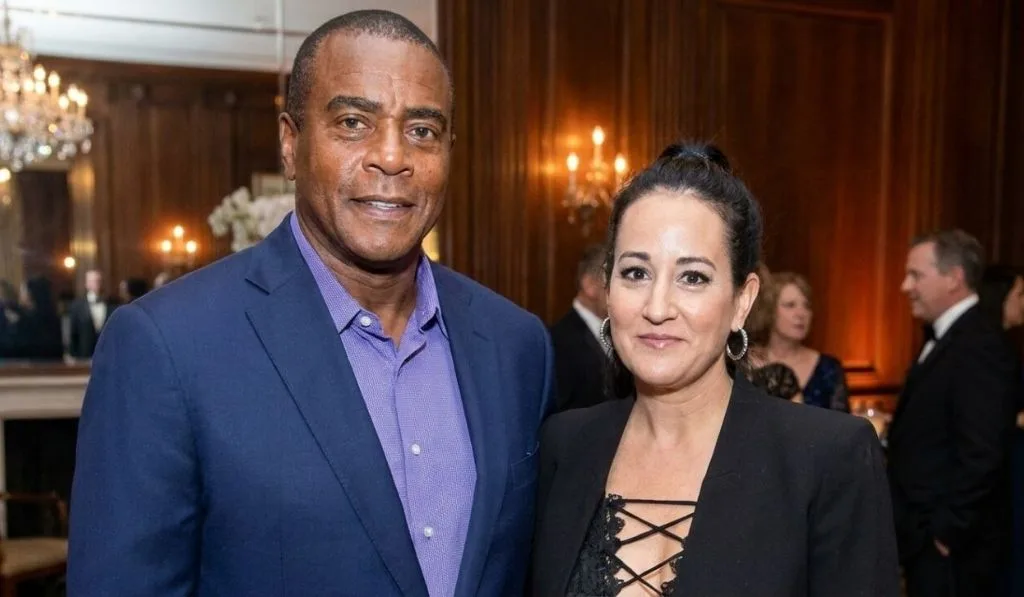
Through marriage, Ana Luz stepped into a large and well-known blended family. Ahmad has six children from previous relationships, the most publicly recognized of whom is actress Condola Rashad, who has built a substantial theater and television career, including her work on the acclaimed series “Billions.” Ana Luz embraced her role as stepmother thoughtfully, approaching those relationships with the same patience she brings to her clinical work.
She and Ahmad also have a daughter together, whose name they have chosen to keep private. That decision is consistent with how they handle all aspects of family life: warmth and love are visible, but personal details stay personal. Ana Luz has spoken through her social media presence about the importance of protecting children from unnecessary public exposure, and she lives that value rather than just stating it.
How she balances public connection with private identity
Being married to a public figure creates a particular kind of pressure that most people never experience. Every appearance, every photograph, every social post gets filtered through the lens of someone else’s fame. Ana Luz handles this with a composure that appears entirely genuine rather than performed.
She maintains separate professional social media accounts for her practice, where she posts thoughtful content about mental health, cultural identity, and emotional wellness. Her personal account is quieter, sharing glimpses of family life without inviting the kind of scrutiny that celebrity culture tends to generate. She has used her platform to show support for social equality, including during the Black Lives Matter movement, but she does it briefly and sincerely, not as a brand moment.
Her professional identity remains entirely her own. She built ALRP Therapy before anyone outside of Florida knew her name. She continues building it now, and the practice’s reputation rests on clinical results and client trust, not on her proximity to fame.
Read more: Edward Roy McHale: the real story behind Joel McHale’s eldest son
What competitors miss: her contribution to underserved communities
Most coverage of Ana Luz focuses on her personal life and her credentials. What tends to get less attention is the community advocacy dimension of her work. She collaborates with local Hispanic organizations in South Florida to connect underserved families with affordable therapy options. She has conducted outreach workshops on emotional wellness, communication within families, and removing the cultural stigma that often surrounds mental health conversations in Latino communities.
She has also served as a guest lecturer at Nova Southeastern University, training the next generation of therapists on how to practice with cultural competence — how to read what a client is not saying, how to understand silence differently across cultures, and how to adjust therapeutic language to fit a client’s lived experience rather than forcing the client to adapt to clinical language that was never designed for them.
This is not small work. The field of psychology has historically been dominated by frameworks developed with white, English-speaking, middle-class populations in mind. Practitioners like Ana Luz who actively push against that default, and who train others to do the same, change what therapy looks like for millions of people.
Ahmad Rashad: a brief profile
For readers less familiar with the name, Ahmad Rashad was born Bobby Moore in 1949 and adopted his current name in 1972 after converting to Islam. He played college football at the University of Oregon before entering the NFL, where he developed into one of the most reliable wide receivers of his era. His post-playing career in broadcasting lasted even longer than his time on the field, and he earned widespread respect for his interviewing style and genuine relationships with the athletes he covered. He remains an active and recognized figure in sports media, now in his mid-70s and still sharp and engaged with the world around him. You can read more about his football career and broadcasting years on his Wikipedia page.
Final thoughts
What strikes me most about Ana Luz Rodriguez-Paz is how deliberately she has avoided letting fame define her. She could easily have leaned into the role of “celebrity wife” and built a public identity around it. Instead, she kept showing up for her clients, kept expanding her practice, kept training other therapists, and kept her family’s private life genuinely private. That takes a kind of quiet discipline that is easy to underestimate.
For Hispanic families in South Florida who have ever walked into a therapist’s office and immediately felt like the person across from them did not understand their world — the family dynamics, the cultural expectations, the way certain emotions carry different weight in Spanish than in English — Ana Luz’s practice represents something genuinely valuable. Not just therapy, but therapy that actually fits.
Her story is worth knowing not because of who she married, but because of what she chose to build on her own.
FAQ
Who is Ana Luz Rodriguez-Paz?
Ana Luz Rodriguez-Paz is a licensed clinical psychologist and the founder of ALRP Therapy, a bilingual mental health practice based in Boca Raton, South Florida. She specializes in family therapy, play therapy, and couples counseling, and offers sessions in both English and Spanish. She is also the wife of former NFL player and sportscaster Ahmad Rashad.
What is ALRP Therapy and where is it located?
ALRP Therapy, also called Paz Mental Health, is a private therapy practice that Ana Luz founded in 2014. It is based in Boca Raton, Florida, and offers telehealth services statewide. The name “Paz” is the Spanish word for peace, which reflects the calm and supportive environment she created for her clients.
What is play therapy and why does Ana Luz use it?
Play therapy is a clinical method that uses creative activities like toys, drawing, and storytelling to help children express feelings they cannot easily put into words. Ana Luz is a certified play therapist, and she uses this approach because children often communicate through action and imagination rather than direct conversation. It gives young clients a safe and natural way to process difficult experiences.
How did Ana Luz Rodriguez-Paz and Ahmad Rashad meet?
They met through mutual social connections and built their relationship slowly and privately over time. Despite their 32-year age gap, they shared common values around family, emotional connection, and living peacefully away from public attention. They married on April 30, 2016, in a private ceremony in Palm Beach Gardens, Florida, officiated by a member of Ana Luz’s family.
Does Ana Luz Rodriguez-Paz have children?
She and Ahmad Rashad have one daughter together, whose name they have chosen to keep private. Through her marriage, she is also a stepmother to Ahmad’s six children, including actress Condola Rashad, who is known for her stage work and her role in the television series “Billions.”
Why is bilingual therapy important for Hispanic communities?
Many Spanish-speaking clients feel more comfortable and communicate more openly in their native language. Research from the American Psychological Association has found that clients describing emotions through a second language often give fewer details, which limits a therapist’s understanding. Ana Luz’s bilingual approach removes that barrier and makes therapy more effective and more accessible for Hispanic and Latino families.
What is Ana Luz Rodriguez-Paz’s net worth?
Her exact financial details are not publicly disclosed. Her income comes from her private practice, ALRP Therapy, where she works as a full-time psychologist. She and Ahmad Rashad maintain a comfortable private life in South Florida but do not publicly discuss or display their finances.